MEDUSA: Call for Abstracts
Submit an abstract here.
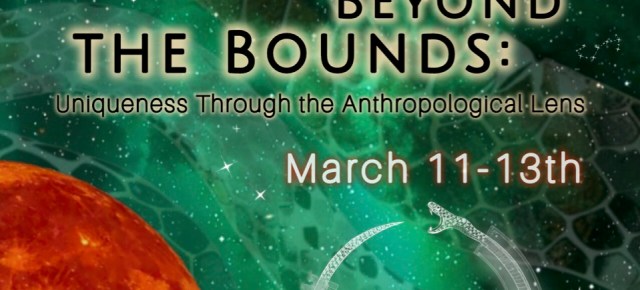
Submit an abstract here.
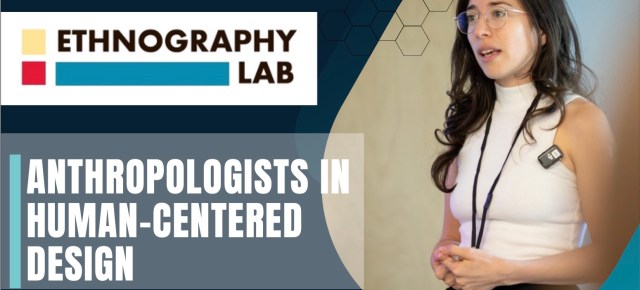
Register here

Please join the Ethnography Lab’s Working Group, The graphic in the ethnographic, for a talk by Professor Sherine Hamdy. A description of the event and how to register is below. Date/Time: Tuesday, January 25, 2022, 5 pm ET Location: Zoom The idea of this entertaining the graphic into the ethnographic series is an experimental attempt … Continue reading

“Gamestorming” is a set of collaborative techniques — loosely structured like games — popular in private sector and nonprofit organizations. Gamestorming is used in group contexts to capture and process information, generate insights, solve problems and establish (or manufacture?) consensus. Usually, gamestorming activities take place during in-person meetings using white boards and sticky notes. During the pandemic, practitioners have increasingly adopted virtual whiteboards and other online tools to facilitate gamestorming. Gamestorming has come to be seen as a core tool in the “UX research” (user experience research) toolbox. Continue reading
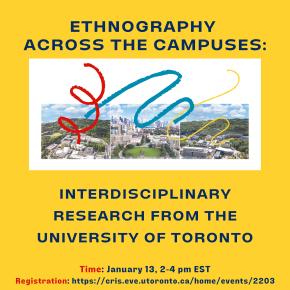
Date/Time: Thursday, Jan 13, 2022 at 2:00 PM to 4:00 PM Description: Join the UTM Collaborative Digital Research Space (CDRS) and the Ethnography Lab (EL) for an informal discussion of ethnography across disciplines and campuses. This event is designed to foster transdisciplinary networks of researchers using, thinking with, and critiquing ethnography practices. Structure of the … Continue reading

Initiated by three students exploring waste, Hindu nationalism, and rural home-rearing practices in India and Egypt, this multispecies ethnography speaker series and collective reads, discusses, and engages with emerging texts exploring humans, animals, jinns, and plants in various parts of the world. Together, we explore possibilities, challenges, and politics of writing, researching, and thinking with … Continue reading
The idea of this entertaining the graphic in the ethnographic series is an experimental attempt at capturing the process in which knowledge production is created when it intersects with the corporal embodiment of stories and telling them with forms and shapes. How can the ethnographic transform (or not) in an affective moment of stories meeting objects beyond … Continue reading

This workshop aims to foster a space for experimentation, play, and critique as participants explore writing about others and other worlds through the gateway of the participant’s embodied experience. Working in the wake of feminist, decolonial, disability, POC, Black, and queer critiques of positivist knowledge production, participants will engage in writing exercises designed to deepen … Continue reading
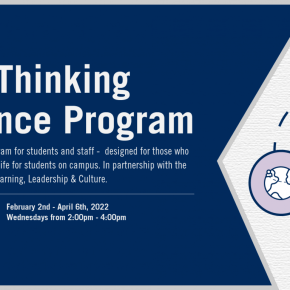
The Innovation Hub at U of T offers training for undergrads and grads who would like to learn qualitative research skills and how to apply them in an institutional environment – in this case, to improve student life at U of T. Check here for info about the program and details on the info sessions … Continue reading

Ethnographic Variations As a form of inquiry, ethnography is often associated with the art of making differences and similarities matter. At its best, it is a mode of knowledge production that has the capacity to unsettle the ground upon which its own comparative practices take place, to disturb a status quo by bringing into existence … Continue reading

Diversity in the University, Wednesday December 8, 10 am -1 pm
The word “diversity” is everywhere in universities these days, but what does diversity mean, and what does it do? How does “diversity” shape the life of the university? Is diversity something you embody, or something you do? How exactly do faculty, staff and students “do” diversity and what becomes of their efforts? Continue reading
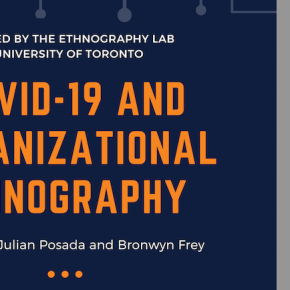
In a crisis such as the COVID-19 pandemic, the decisions of governments, institutions, and corporations influence dozens, thousands, and sometimes millions of lives. Understanding how such organizations respond to crises and why they choose particular strategies over others is therefore of critical importance. Ethnography can be an important tool in such understandings because it is well-suited to untangling and tracing on-the-ground power relations. Continue reading
 Ethnography Lab