Our colleagues at the University of Toronto have organized a workshop on May 4th (10AM-4PM, AP246) as a part of the Osaka University summer exchange program that happens annually at the anthropology department and is run by Prof. Shiho Satsuka, along with Profs. Bonnie McElhinny and Girish Daswani. The workshop theme is about multiplying our … Continue reading
Author Archives: JessikaTremblay
Ethnography Lab Summer High School Program 2018 (Revised Dates)
If you are interested in this opportunity, which runs from July 9th-13th 2018, please fill out the application form and submit by email to ethnography.lab@utoronto.ca by May 30th, 2018. Continue reading
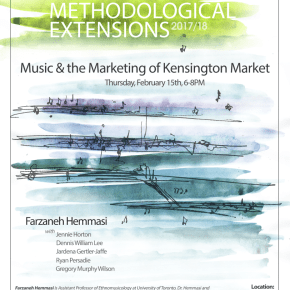
Music and the Marketing of Kensington Market
About the Methodological Extensions Panel Series 2017-2018 For the 2017/2018 academic year, the Ethnography Lab is excited to present Methodological Extensions, a series of panel presentations exploring non-traditional methods or sites of ethnographic research. The series consists of four separate panel discussions, each presenting the work of faculty members, graduate and undergraduate students, who are working … Continue reading
Online Ethnography of Islamophobia in the East & West of the European Union
About the Methodological Extensions Panel Series 2017-2018 For the 2017/2018 academic year, the Ethnography Lab is excited to present Methodological Extensions, a series of panel presentations exploring non-traditional methods or sites of ethnographic research. The series consists of four separate panel discussions, each presenting the work of faculty members, graduate and undergraduate students, who are working … Continue reading
The Video Interview: A Workshop
Thursday, January 12, 5-6:30pm The Ethnography Lab is pleased to continue its 2016-2017 Workshop Series a workshop about video interviews. Video is an efficient and accessible means of documenting and disseminating what happens in an ethnographic interview. When used together with a transcript, for example, a wealth of visual cues complements the text. While researchers can write things like … Continue reading
Ethnography of the University 2015
Students from Prof. Tania Li’s fall 2015 course entitled ‘Ethnographic Practicum: Ethnography of the University’ compiled blog posts and documents from their experience conducting ethnography of the power structures that shape the University of Toronto. Click on items from the drop-down menu for more information. Continue reading
Calling Socio-cultural Anthropology Undergraduates: Fully Funded Summer Internship in India
Professor Tania Li has received funding from the Dean’s International Initiatives Fund (DIIF) to cover air fare and living costs for 4 students to travel to Kerala, India, for internships at the Centre for Research and Education for Social Transformation (CREST). The commitment is for two months, May-June (2 interns) and July-August (2 interns). Six … Continue reading
Visual Ethnography Meeting Dec 6th
Project Feedback Session December 6th, 5-8pm Ethnography Lab Seminar Room 330 The Ethnography Lab Visual Ethnography group is inviting you to an informal project feedback session. This is an opportunity to present and discuss visual ethnography projects in any stage of completion. A range of visual media is encouraged, including photography, film and video, digital … Continue reading
Magical Objects: A Workshop
Thursday, November 24th, 5-6:30pm The Ethnography Lab is pleased to launch its 2016-2017 Workshop Series. Magical objects are a type of object that are thought to have either intrinsic supernatural powers or the ability to help connect people with a supernatural world in some way. As objects, they can act as potent signifiers, communicating a range of … Continue reading
Workshop: The Afterlife of Fieldnotes
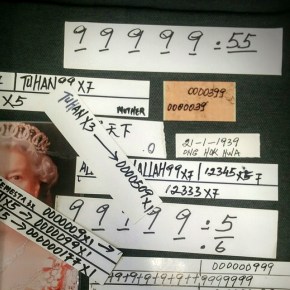
Thursday, October 27th, 5-6:30pm The Ethnography Lab is pleased to launch its 2016-2017 Workshop Series. We (Josephine Smart and Alan Smart) will focus on the afterlife of fieldnotes and their intersections with confidential Hong Kong government documents, rather than their use in the original project for which they were collected. In particular, we will address their current … Continue reading