By Lukey Lu Speaking of contemporary social science and humanities, Michel Foucault is definitely a figure that is impossible to ignore. Foucauldian thinking towards discourse and power greatly influences contemporary anthropologists. In her work, Foucault Foments Fieldwork at the University, Prof. Li introduces the advantages of incorporating a Foucauldian way of thinking about the ‘university’: … Continue reading
Tag Archives: history
On Coping With Ethnographic Disappointment
By Cameron Miranda-Radbord It is a real loss for future generations of students in ANT 473 that Professor Li is retiring, but if the course continues to be taught, I have a scintilla of what I think is wisdom: your ethnography may not be everything you hoped it was. When I researched “anthropology disappointment” and … Continue reading
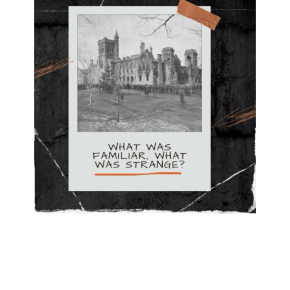
What was Familiar, What was Strange?: Rediscovering the University Through a Lens of Curiosity and Complexity
By Georgia Hanson, Molly McGouran an Yihang Xu If you are familiar with something, how can it be strange? Our individual experiences with fieldwork in Student Life presented us with new avenues through which we could explore this question, each of us gaining a new perspective on the university that we had once so confidently … Continue reading
Managing a Problem You Can’t Solve
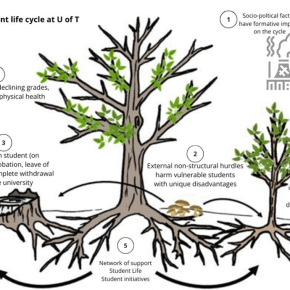
By Daisy Sanchez Villavicencio and Lukey Lu Imagine a wilting tree, rotting leaves fall throughout the seasons, the bark is visibly decaying, fungi is sprouting around the roots and bark. Now imagine the role of a forester or dendrologist who was hired to treat the rotting tree; the source of the rot, such as the … Continue reading
Introducing the New Ethnography Lab Coordinator
Dr. Emily Hertzman returns to the Department of Anthropology as a Research Associate and Ethnography Lab coordinator, inviting faculty and students to engage with the lab’s diverse activities. The lab fosters ethnographic research, supports student initiatives, and aims to enhance academic programs through collaborative workshops and events, reflecting inclusivity and creativity. Continue reading