Final Report By Amani Hassan “Student Life”: A New Profession for a New Institutional Priority International university ranking systems have increasingly shaped how institutions like the University of Toronto structure their priorities. Following an observed influence of student input on universities’ global ranking, a new profession emerged in many academic institutions that specifically intends to … Continue reading
Tag Archives: education
Seeking Community in Normalized Isolation: A Reflection on the Importance of ‘Third Space Professionals’ in the Post-pandemic University
By Amani Hassan ‘Student Life’ (SL) and similar student experience-focused entities in universities emerged within the last decade, partly as a response to the importance of “student experience” as a category on international rankings. However, departments such as SL’s Clubs and Leadership Development (CLD) now have an additional significance in the post-pandemic university, as they … Continue reading
Symbiotic Ethnographies: Approaching Research at Two Connected Field Sites
By Amani Hassan Making the strange familiar and the familiar strange is central to ethnographic research. Ethnography typically involves participant observation, where the researcher immerses themself in a community to understand it from a culturally relative perspective. But how do you approach this when you are researching two groups and are also an active member … Continue reading
Are Leaders Found or Created?: The Myth of the “Ideal” Student Leader
By Amani Hassan The concept of the ‘ideal’ student is prevalent in universities, often shaped by expectations that reflect the institution’s prestige and effectiveness. The ideal student is typically understood as diligent, respectful, and engaged—traits that align with a ‘professional’ image. Universities further reinforce these qualities as desirable through scholarships, awards, and recognition. The University … Continue reading
Discourse vs. Practice: Ambiguity in Student Roles at Student Life
By Angelina Nguyen, Norah Rahman and Richard Wu Our collective fieldwork revealed some ambiguity concerning how student roles are portrayed in Student Life (SL) discourse and how they work out in practice. Below we discuss student roles as labourers, consumers, and advisors. Student as workers: SL employs hundreds of work-study students and spends over a … Continue reading
A Digital Labyrinth: Navigating Information on the Student Life Website
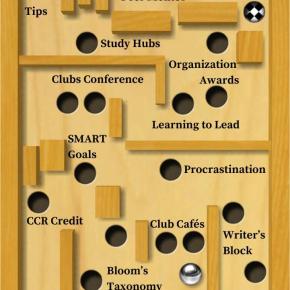
By Amani Hassan and Hanisha Mistry Staff at the Centre for Learning Strategies Support take pride in the resource library which offers PDF documents on various topics designed to support academic success and help students adapt to university-level learning. Accessing this library involves three straightforward steps: “Student Life Homepage > Departments > Centre for Learning … Continue reading
What Exactly is Participant Observation?
By Yunshan Li and Georgia Hanson Participant observation is the foundational method of ethnographic research. It requires the researcher to immerse themselves in the field site to gain insights into a culture. However, in the case of our research in Student Life, we were limited from such immersion, barred from participation, and limited to a … Continue reading
The Online World: Ethnography Behind the Screen
By Molly McGouran and Lukey Lu From our first meetings with Student Life administration, it was clear that our participant observation would be different from what we expected. Most of the staff work from home; therefore, much of the programming offered by the Centre for Learning Strategy Support (CLSS), where we conducted our work, was … Continue reading
The Art of Engaging Students: The Impact of Incentives on Student Engagement
By Yunshan Li, Richard Wu and Amani Hassan On an early afternoon in October, we visited the reception office of the Clubs and Leadership Division of Student Engagement for a social event for club leaders. We arrived to find only one club leader, accompanied by two staff members. Half an hour later, another student showed … Continue reading
Managing a Problem You Can’t Solve
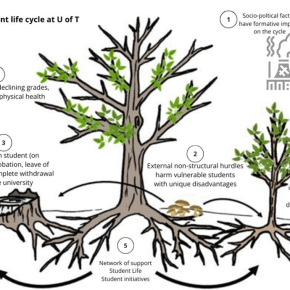
By Daisy Sanchez Villavicencio and Lukey Lu Imagine a wilting tree, rotting leaves fall throughout the seasons, the bark is visibly decaying, fungi is sprouting around the roots and bark. Now imagine the role of a forester or dendrologist who was hired to treat the rotting tree; the source of the rot, such as the … Continue reading