By Lukey Lu “What is a university?” This may seem like a simple question, but I believe everyone has their own answer — these answers may be diverse and different among individuals. However, if we deeply reflect on this word, we may realize the difficulty in defining it. The ‘university’ can connote many things: the … Continue reading
Category Archives: Ethnography of the University: Focus on Student Life 2024
Over the past two decades, Student Life has emerged at the University of Toronto and elsewhere as a domain where various aspects of student life become subject to expert management with the aim of facilitating learning, enhancing well-being, minimizing stress, and promoting a healthy and productive university experience. Yet for most students at U of T, Student Life (like most parts of the institution) is a black box: they have no idea what goes on there.
Students in the 2024 Ethnographic Practicum set out to address a deceptively simple question: what does student life do? The website https://studentlife.utoronto.ca/ provides a list of programs but behind each of these, there is a story. How did this program come to be? What are the problems to which this program is offered as a solution? How do student life managers and staff go about their everyday work? How do they explain, promote, evaluate, and defend their work to different actors (students, faculty, administrators, senior managers, auditors, rankings agencies, the media, parents, and other universities?).
Students from Prof. Tania Li’s fall 2024 course entitled ‘Ethnographic Practicum: Ethnography of the University’ compiled blog posts and documents from their experience conducting ethnographies of Student Life at the University of Toronto.
Learning Strategists’ counter-hegemonic practice: English or Englishes?
By Lukey Lu “You belong to English. English belongs to you. There’s nothing wrong with you. You don’t need to apologize for your English. Right? Like so we talked about kind of big picture principles (to the students). But yeah, absolutely, in practice, how do you implement?” This is a quotation from my interviewee Frank … Continue reading
‘Beyond Foucault’: Compatibility of Discourse Analysis and Phenomenology in Ethnographic Research Methodology
By Lukey Lu Speaking of contemporary social science and humanities, Michel Foucault is definitely a figure that is impossible to ignore. Foucauldian thinking towards discourse and power greatly influences contemporary anthropologists. In her work, Foucault Foments Fieldwork at the University, Prof. Li introduces the advantages of incorporating a Foucauldian way of thinking about the ‘university’: … Continue reading
Empowering Learners, Transforming Institutions:Learning Strategists’ Role in Higher Education
A Final Report By Hanisha Mistry Introduction The fluorescent light hummed softly in the temporary office on Bay Street, a functional yet impersonal space where the Centre for Learning Strategy Support (CLSS) had set up during the Koffler Student Centre renovations. Despite its unremarkable setting, the CLSS is defined not by its location but by … Continue reading
The Complementary Roles of Mentors and Strategists
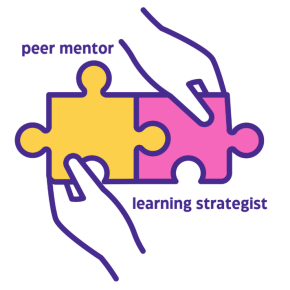
By Hanisha Mistry There is a need for Student Life’s resources, and there is a reason why we have both peer mentors and Learning Strategists. A poignant quote from a conversation I had with a Learning Strategist captures this need: “Students are saying, ‘I need to talk about my learning in not an evaluated space.’” … Continue reading
Too Many Students, Too Few Strategists
By Hanisha Mistry Learning Strategist’s days cannot accommodate all of U of T St. George. The University of Toronto’s St. George campus serves approximately 68,454 students, while the Centre for Learning Strategy Support (CLSS) operates with only 22 professional staff and 12 peer mentors. This stark disparity reflects a systemic imbalance between the student population … Continue reading
Co-Creating Knowledge: Ethnography With, Not Of, Interlocutors
By Hanisha Mistry When I first imagined going into the field as an ethnographer, I envisioned something akin to Bronisław Malinowski’s arrival in the Trobriand Islands. I pictured myself stepping into a space where ethnography was an unfamiliar word, and my interlocutors, unacquainted with the methods of anthropology, would meet my questions with unfiltered answers. … Continue reading
Student Life’s Strategic Plan: an Ethnography of Organizational Culture in Higher Education
Final Report By Daisy Sanchez Villavicencio We have become familiar with the idea that large organizations like Universities are guided by Strategic Plans and produce annual reports. My research in the University of Toronto’s division of Student Life permitted me to examine the practices involved in this production and the rationality or mode of reasoning … Continue reading
How U of T’s Student Life drastically differs from student affairs organizations at three competing universities
By Daisy Sanchez Villavicencio From conversations with ANT473 peers, focus groups, and friends, I have concluded that Student Life (SL) has a reputation for offering a complex range of services that can overwhelm students and deter them from accessing the support they were promised. According to an SL staff interlocutor, SL has ten units and … Continue reading
Auditing Impact at Student Life
By Daisy Sanchez Villavicencio In the early weeks of ANT473, Professor Li assigned students “Coercive Accountability: the rise of audit culture in higher education” by Cris Shore and Susan Wright (2003), which brought our attention to the effects of technological practices as they interact with social life and cultural change. Audit technologies, which I understand … Continue reading