Upcoming Affect Theatre Workshop
Events / Updates

Upcoming Affect Theatre Workshop

The Affect Theatre workshop, hosted by Cristiana Giordano and Greg Pierotti at the University of Toronto, will focus on a unique theatrical technique that utilizes non-theatrical source materials. Spanning two days, participants will learn and apply these methods to their own research, fostering collaboration and engagement. Registration is limited to 25 attendees. Continue reading

Upcoming Affect Theatre Workshop
Events / Updates

Upcoming Affect Theatre Workshop

The Affect Theatre workshop, hosted by Cristiana Giordano and Greg Pierotti at the University of Toronto, will focus on a unique theatrical technique that utilizes non-theatrical source materials. Spanning two days, participants will learn and apply these methods to their own research, fostering collaboration and engagement. Registration is limited to 25 attendees. Continue reading

UPCOMING: Cookbooks and Mestizaje: Tracing Changing Ethnoracial Hierarchies through Interviews, Ethnography, and Food Recipes
Updates

UPCOMING: Cookbooks and Mestizaje: Tracing Changing Ethnoracial Hierarchies through Interviews, Ethnography, and Food Recipes

Nino Bariola Gonzales Friday, Dec 13th, 2024, 5:00 – 6:00 pm, Room 330- Ethnography Lab Boardroom What stories can food recipes and cookbooks tell us about racial hierarchies and nation-building? In the last few decades, historians, anthropologists, and cultural theorists started using cookbooks to reconstruct the histories of beliefs and debates about gender roles, class … Continue reading

Introducing the New Ethnography Lab Coordinator
Updates

Introducing the New Ethnography Lab Coordinator

Dr. Emily Hertzman returns to the Department of Anthropology as a Research Associate and Ethnography Lab coordinator, inviting faculty and students to engage with the lab’s diverse activities. The lab fosters ethnographic research, supports student initiatives, and aims to enhance academic programs through collaborative workshops and events, reflecting inclusivity and creativity. Continue reading

How to Study an Infrastructure: Technicality, Illegality & Bureaucracy  by Sarandha Jain
Updates

How to Study an Infrastructure: Technicality, Illegality & Bureaucracy by Sarandha Jain

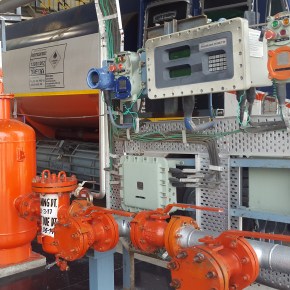
On November 22, 2024, Dr. Sarandha Jain will discuss challenges in studying technical infrastructures like oil refining in India. She will explore governance, secretive knowledge, and anthropological biases through her fieldwork, inviting dialogue on methodologies and implications of such research for state-citizen relations, based on her extensive background in anthropology. Continue reading

UPCOMING: Cookbooks and Mestizaje: Tracing Changing Ethnoracial Hierarchies through Interviews, Ethnography, and Food Recipes
Updates

UPCOMING: Cookbooks and Mestizaje: Tracing Changing Ethnoracial Hierarchies through Interviews, Ethnography, and Food Recipes

Nino Bariola Gonzales Friday, Dec 13th, 2024, 5:00 – 6:00 pm, Room 330- Ethnography Lab Boardroom What stories can food recipes and cookbooks tell us about racial hierarchies and nation-building? In the last few decades, historians, anthropologists, and cultural theorists started using cookbooks to reconstruct the histories of beliefs and debates about gender roles, class … Continue reading

Social Science and Design Workshop: Dismantling Google Search Engine
Updates

Social Science and Design Workshop: Dismantling Google Search Engine

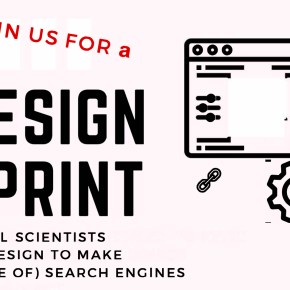
On October 10, 2024, a design workshop led by Koray Caliskan will explore how social scientists can utilize design to understand economic dynamics within organizations, focusing on Google’s search engine as a case study. The workshop aims to empower participants in design, emphasizing the relevance of social theory in economic design. Continue reading

Navigating Dangerous Fields: Storytelling, Waiting and Ethnography as not “Writing Down” by Omer Ozcan
Updates

Navigating Dangerous Fields: Storytelling, Waiting and Ethnography as not “Writing Down” by Omer Ozcan

n the summer of 2012, when the war between the Kurdish guerrillas and the Turkish army reached a crescendo, I started my ethnographic research in Gever (Yüksekova in Turkish), a Kurdish border town in the southeastern tip of Turkey. As I was spending my first days with my family and friends and slowly getting ready to embark on my first extensive fieldwork, the town was shaken up by the news that the Turkish helicopters, fighter jets, and artilleries were pounding the mountainous terrain in the neighbouring town of Şemzînan, located just 50 kilometres to the southeast of Gever. Everyone in the town was sure that Gever would be the next battleground. Conducting ethnographic research under these conditions as a native anthropologist was a considerable risk for me, my interlocutors, and my family and friends. Instead of immediately “writing down” or digitally recording my fieldwork data, I turned to the Kurdish oral tradition and devised storytelling as the primary mechanism to tell and retell the stories I collected during my research. Postponing the process of “writing down” was a tactic I developed during my fieldwork as I learned how local Kurds used waiting as a distinct temporal orientation to evade state control, organize political action, and navigate highly militarized borderlands. By elaborating on the methodological tactics I developed by combining Kurdish oral tradition with the everyday strategies of my research participants, namely waiting, this paper will offer some practical advice to researchers on developing flexible research designs and learning from their research participants how to navigate repressive or militarized settings. Continue reading