Djuna Nagasaki
Friday, Nov 13th, 5:00 – 6:00 pm. Ethnography Lab Boardroom, room 330.
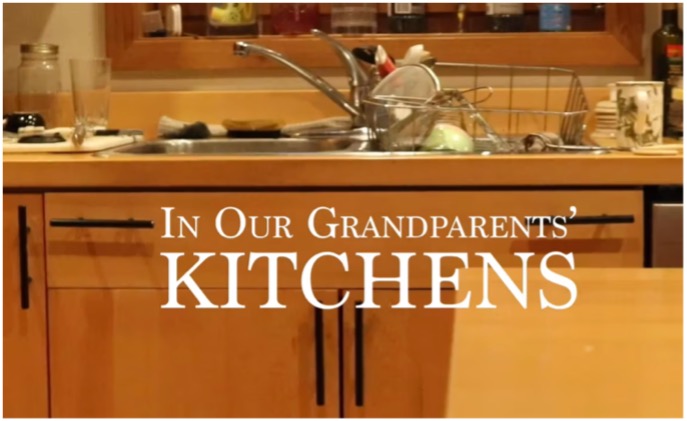
Our Grandparents’ Kitchens is an ethnographic film that seeks to address the question; What does it mean to be Japanese Canadian? By highlighting the voices of young Japanese Canadians as they work to reconnect with culture and a sense of community, in light of the ongoing impacts of the Japanese Internment camps of WW2, this film seeks to build an understanding of the diverse ways in which this identity manifests. Working with a primarily ‘mixed’ cast, this film explores the complexities of identity for these young descendants of internment, as they embark on a journey of reconnection and reclamation, using food as an avenue for coming together and connecting with their pasts. In this event, Djuna Nagasaki will present her research and show her film, after which there will be an opportunity for a Q&A and discussion on the research methods utilized in this work, particularly multimodal methods. As she states: “For many of us younger generations, our lives have been burdened by the conflicting identities we carry. So, in this film, I take you back to my grandfather’s kitchen, where I have always been allowed to exist as a whole.”
Djuna Nagasaki is an MA student in the anthropology department at UofT, whose research focuses on Japanese Canadian/Nikkei (i.e. Japanese diaspora) identity, drawing from her own experience as a fifth generation (Gosei) Japanese Canadian and descendant of Internment camp survivors. For her undergraduate honours research project at the University of Victoria, she created a short ethnographic film titled “In Our Grandparents’ Kitchens” with an accompanying research paper which explored the identities of Yonsei and Gosei (4th and 5th generation) Japanese Canadians and how the food passed down in their families become an avenue for connecting to identity and to one another, in the face of lingering impacts of the Japanese Canadian Internment of WW2. This work was very well received, and led her to receive the W. Kaye Lamb Award for Best Student Works from the BC Historical Foundation and the CASCA Outstanding Graduating Anthropology Student Award upon finishing her program.
 Ethnography Lab