By Molly McGouran

t UofT, being the ideal professionalized student-tutor is about more than just excelling in your studies or helping others with theirs. The University of Toronto Tutor Training Program (UT3) has a clear vision of what an ideal student-tutor should be: vigilant, honest, ethical, and, above all, well-informed.
But what does that actually mean? As I clicked my way through UT3’s asynchronous training modules. – “Assignment and Syllabus Analysis” and “Identify, Assist, Refer” – a picture started to emerge. This was not only about training tutors on how to help with course content. It was about creating a professionalized student-tutor equipped to navigate and direct others through the maze of resources at UofT.
Most striking in these modules was the way student-tutors are trained to be ready to direct students to any and all services provided by UofT that they are aware of. In the Assignment and Syllabus Analysis, student-tutors are encouraged to send their students back to existing academic aid resources if they need additional help. One slide includes the heading “Did you know?” followed by a link to the peer mentorship appointments offered by the Centre for Learning Strategy Support (CLSS). Another section entitled “Additional Resources” directs tutors to a comprehensive list of academic resources available through Student Life. Essentially, student-tutors are trained to act as navigators, understanding the offerings for academic aid resources at UofT. However, the role of the ideal professionalized student-tutor does not end there.
The responsibilities of student-tutors extend far beyond academics. The Identify, Assist, Refer module guides tutors on how to offer assistance to students they suspect to be going through mental health challenges. In the final section of the module, “Refer,” student-tutors are taught a four-step plan for referring students they deem at risk to further mental health resources. Along with the module, student-tutors are given a link to a webpage with seventeen on-campus and fifteen off-campus resources for mental health support. This approach positions student-tutors as first responders, not only for academic struggles but also for emotional well-being.
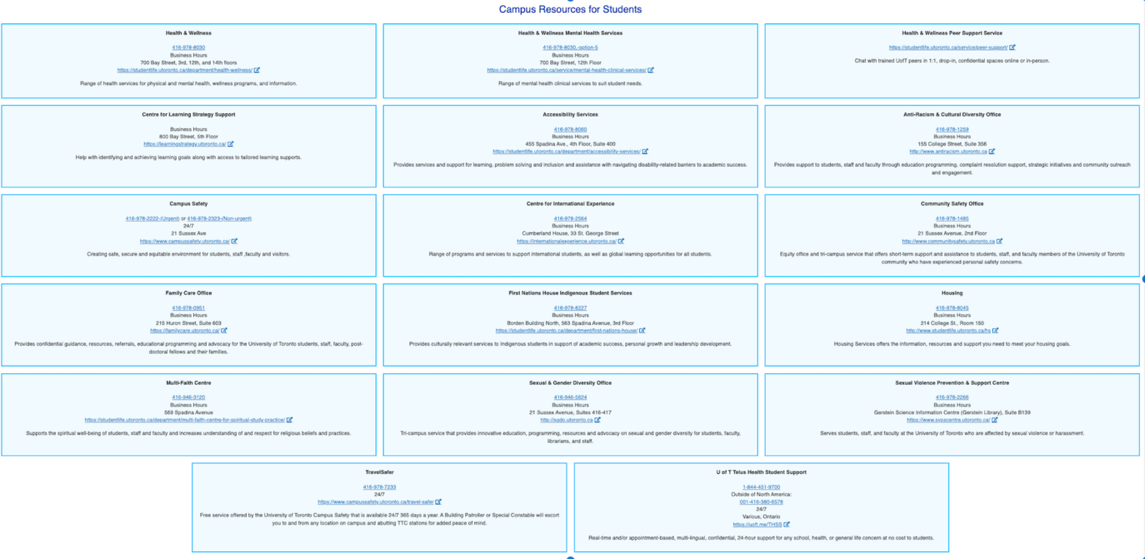
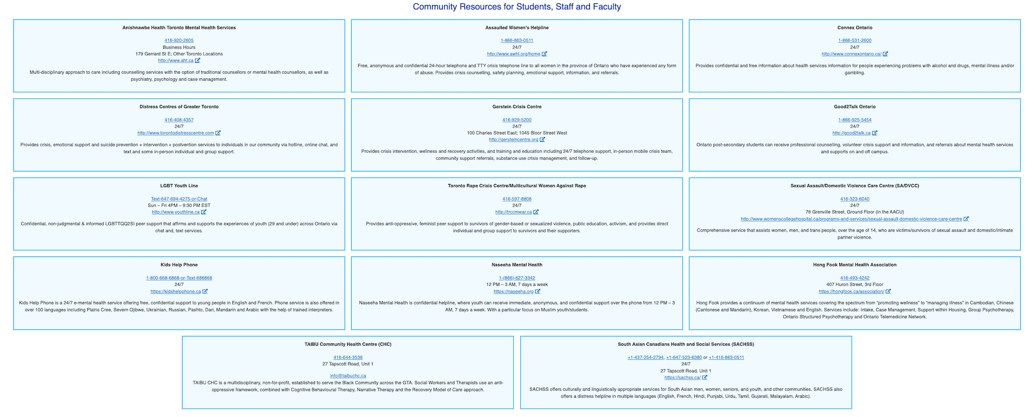
It is apparent through these modules that a heavy emphasis is placed on the professionalized student-tutor being well-versed in directing students to additional help. The question remains: why is this so important for being a tutor?
The UT3 program goes beyond teaching tutoring techniques. The ideal professionalized student-tutor at UofT is not just a tutor – they are a navigator, a guide, and sometimes even a lifeline. Through the UT3 program, UofT has crafted a unique role in the form of the professionalized student-tutor, one that places resource referral at the heart of what it means to help others. But as student-tutors guide their peers through the maze of resources, it is worth asking: does this approach truly address the root of student struggles, or does it simply perpetuate the cycle of resource reliance? This is to say that training student-tutors to be first responders could open up more resources to more students, or it could potentially just shuttle them between existing resources without finding concrete solutions to student issues. Further, the student-tutor trainings bring up the question of why so many UofT resources remain unknown to many of its students, and if training tutors specifically is the best way to spread this important information.
 Ethnography Lab