By Lukey Lu
Speaking of contemporary social science and humanities, Michel Foucault is definitely a figure that is impossible to ignore. Foucauldian thinking towards discourse and power greatly influences contemporary anthropologists. In her work, Foucault Foments Fieldwork at the University, Prof. Li introduces the advantages of incorporating a Foucauldian way of thinking about the ‘university’: 1) it is an effective way to make the familiar strange through problematization of the surroundings, and 2) it provides a more comprehensive path to understand power and governance as multi-causal rather than unidirectional—there are always messy discursive forces behind the ‘problem’. However, Prof. Li also addresses the limitations of Foucault in ethnographic study: 1) Foucault’s over-focus on broader knowledge production ignores particular groups’ experiences; and 2) Foucault’s neglect of using discourse analysis to uncover the multiple power relations and dynamics behind certain practices.
In this post, I would like to further elaborate on the limitations of Foucauldian methodologies in ethnographic study by rethinking his view of ‘subjectivity’ — it is dangerous to merely apply his thinking in ethnographic research. Thus, this post intends to methodologically think ‘beyond Foucault’ by suggesting the compatibility between discourse analysis and phenomenological examination of individuals’ experiences. Further, by connecting to the ‘ladder of abstraction’ analogy, this post aims to demonstrate the importance of combining these methods as ethnographic approaches.
Subjectivity is a paradoxical concept for Foucault. Foucault denies the stableness and spontaneity of subjectivity within the individual: individuals’ subjectivity always emerges within power relations and discourse. Power is thus productive—individuals submit themselves to power, and power produces their subjectivity through these relations. Certainly, integrating such a concept methodologically may enable ethnographers to widen their vision and see the possibility of multiple powers operating behind a single practice or individual.
However, a concern about the researcher’s positionality should be raised: will such a view also strip individuals of their agency—i.e., in claiming their knowledge from their own phenomenological experience about themselves?
Since Foucauldian subjects are always involved in power relations, their subjectivity, behaviors, and consciousness are influenced and produced by multiple powers. Discourse analysis grants researchers the ability to visualize these power dynamics, but it also subtly gives researchers another form of ‘power’ — the power to claim ‘authority’ over individuals. In other words, because researchers are in an ‘outsider position’ towards individuals and their power relations, they may believe they have a clearer ‘understanding’ of those individuals’ behavior and thoughts — even better than the individuals themselves. Researchers then subtly become an agency-like figure towards the individual — this may lead to unconscious ignorance of individuals’ experiences and an overemphasis on broader power relations.
Although subjectivity is a product of power, each individual experiences their surroundings fundamentally and ontologically differently. To bring back individuals’ agency and the legitimacy of their everyday experience, ethnographers should not merely obsess over Foucauldian analysis — it is always crucial to build upon the ‘concreteness’ of ethnographic data. No matter how much power appears to assimilate individuals, it is important to start from the ‘ground’ — understanding and recognizing individuals’ actual living experiences.
In fact, such methodological incorporation is complementary and can be analogically corresponded to the ‘ladder of abstraction’ model in ethnographic writing.
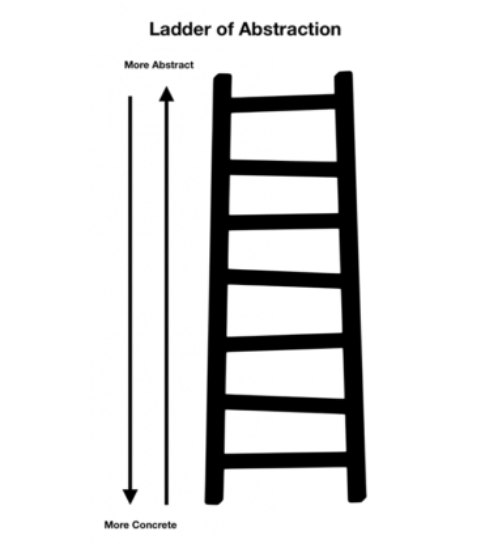
In the ladder of abstraction, the bottom refers to ‘concreteness’ (e.g., ethnographic descriptive data) and the top refers to ‘abstractedness’ (e.g., theories—those more ‘invisible’ and difficult to measure in daily life). The process of ‘climbing up and down’ then means connecting concreteness and abstractedness together. Thus, what this model suggests is that an ethnography should entail both ethnographic concreteness and theoretical abstractedness—and they should be organically connected. This is analogically similar to the compatibility of phenomenology and discourse analysis as ethnographic methods: the focus on individual experience in phenomenology is the ‘concreteness’ of data, and the discursive addressing of power structures refers to ‘abstractedness’ as climbing to the top of the ladder.
Thus, Foucauldian thinking is a good methodological ‘tool’ to enable researchers to think broadly and make connections, but it is not enough for ethnographic study. The ‘concreteness’ should also be focused on and addressed, which is why a phenomenological examination of individuals’ actual experiences is crucial and should be used complementarily with discourse analysis in ethnographic research.
 Ethnography Lab