By Georgia Hanson, Molly McGouran an Yihang Xu
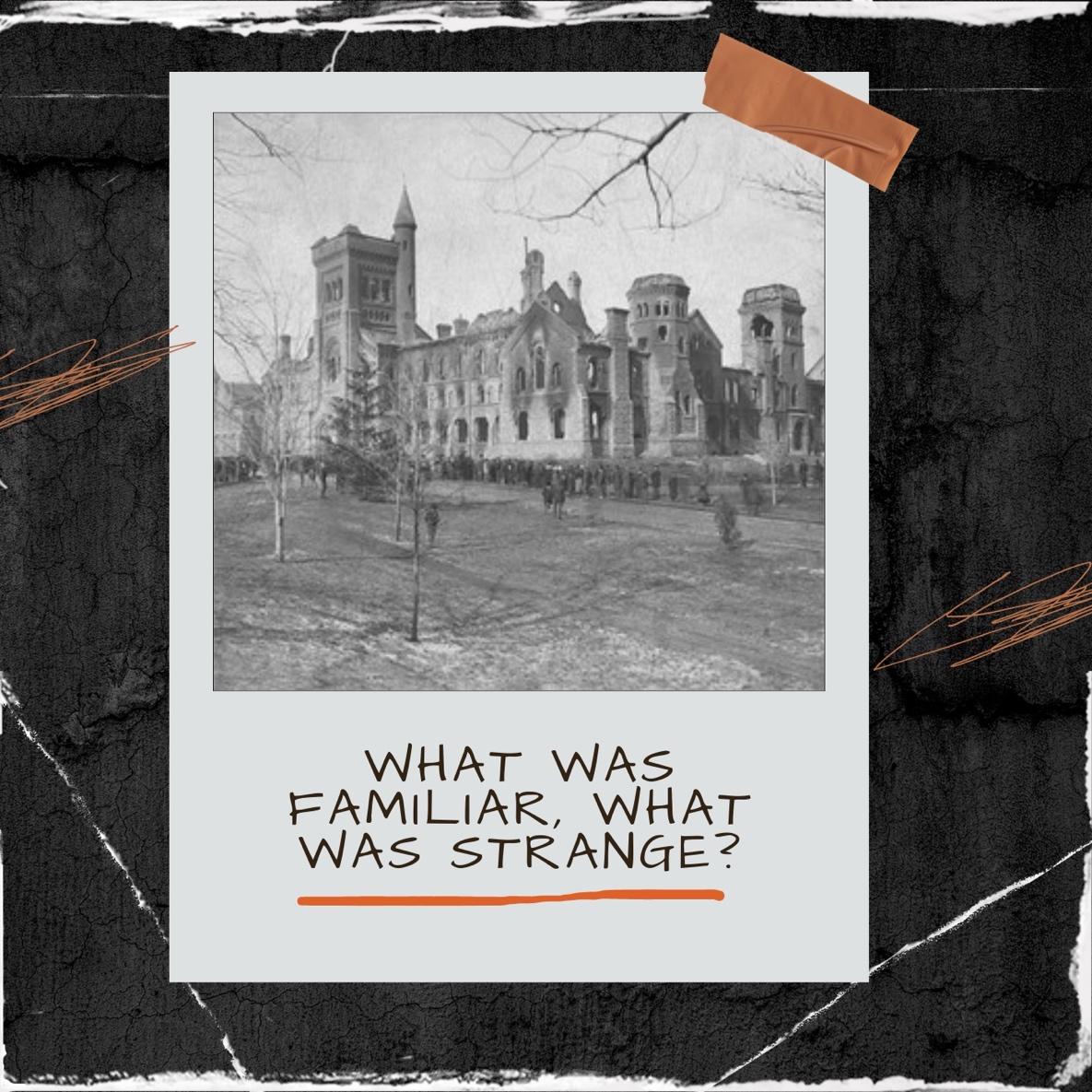
If you are familiar with something, how can it be strange? Our individual experiences with fieldwork in Student Life presented us with new avenues through which we could explore this question, each of us gaining a new perspective on the university that we had once so confidently felt we knew.
Be careful what you wish for because you might just get it. Georgia chose to do ethnographic research at the Innovation Hub, but had no idea that she would turn into an axe positioned to cut down a big tree. The iHub sits as a separate entity of Student Life that employs a peer-to-peer design thinking approach to research. What is design thinking? Georgia conducted interviews and visited her field site on multiple occasions to make design thinking familiar. Right from the start of the research, it was clear that U of T cares about the students. The research is empathy-based, and the iHub location in the Student Commons building is an intricately designed space that puts effort into taken-for-granted things such as lighting and table spacing. What ethnography uncovered is the measures Student Life takes to enhance the student experience.
Molly’s field work entailed attending administrative meetings in the Centre for Learning Strategy Support (CLSS) and academic workshops, which she knew little about before. Her research brought up many questions about the field site: what was familiar, and what possibly should have been more familiar? Gaining insight into the administrative side of learning strategy programming meant being made aware of programs that many students browse by in an email, but never stop to investigate. Ethnography asks us to make the familiar strange, but looking further into the programming, it was apparent that for Molly and many other students at UofT, the inner workings of their own school were in fact already strange. Her ethnographic work, therefore, became a practice of becoming familiar with the strange within an institution that had once felt familiar.
Yihang had attended workshops at the CLSS during his first year, when it was called the “Academic Success Center.” These sessions supported his transition as an international student navigating the pandemic from afar. Revisiting the CLSS in 2024 through ethnographic research revealed a more intricate reality. As an insider researcher, Yihang observed and interviewed learning strategists, uncovering the complex dynamics between U of T’s governing body, professionalized departments like the CLSS, and the diverse challenges students face. This exploration transformed his understanding of academic support services, revealing the nuanced interplay of institutional structures, professional practices, and student needs.
The anthropological process of “making the familiar strange and the strange familiar” serves as a fundamental epistemological framework in ethnographic fieldwork. While traditional anthropology often focuses on distant, unfamiliar communities, conducting research within a setting as familiar as one’s own university presents a unique reflexive challenge. For the three of us, ethnographic inquiry enabled a deeper exploration of the university’s social world—a world we previously thought we understood. This approach illuminated hidden complexities, prompting us to question our assumptions and recognize the nuances of our engagement with the institution. By employing methods such as participant observation, interviews, and critical reflection, we uncovered layers of meaning in our experiences, transforming the seemingly familiar into a site of academic investigation. Yet, this process is iterative: as we grew more familiar with our subjects, new puzzles and questions emerged, perpetuating the cyclical nature of ethnographic inquiry. Ultimately, this looping process not only deepened our understanding of the field site but also underscores the value of ethnography in challenging perceptions, fostering critical thinking, and unraveling the intricate dynamics of seemingly familiar worlds.
 Ethnography Lab