By Angelina Nguyen, Hanisha Mistry, and Norah Rahman
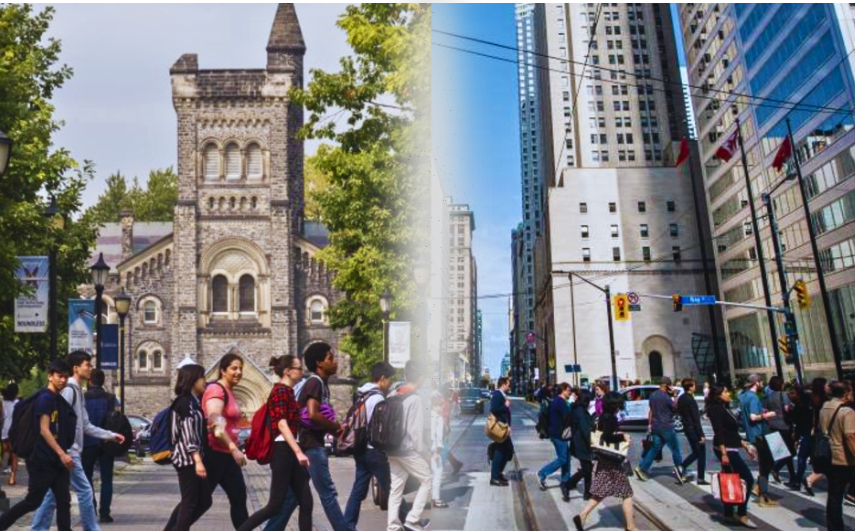
“Why go to University?” Many students pursue higher education to increase their chances for jobs. The University of Toronto entices students with its prestige and reputation for producing high-achieving scholars. However, does your GPA and the name of your academic institution truly matter if you can’t apply yourself in the workforce? Students have much more on their plates outside of attending lectures and doing their coursework. Thus, Student Life (SL) is fundamental to students’ personal lives at large. Throughout our research, we have come to understand the complicated nature of how Student Life (SL) affects students’ lives.
At the beginning of the course, we examined the vast array of programming and services offered by SL, thinking the overwhelming set of resources almost may be “too much.” Our initial analysis suggested it was the responsibility of SL to aid struggling students and provide support from the first day of classes to graduation day.
Our research deepened our understanding. We learned that within Student Life Services (SLS), the responsibility for engagement falls on the students, who must actively seek out and interact with these resources—provided they discover them in time. Unfortunately, despite SL’s attempts at outreach, some students remain unaware of the services available, causing them to slip through the cracks.
Our initial analysis suggested that SL Staff Members were prime advocates for students. We later saw how SLS helps students learn how to advocate for themselves. Students must work with the staff members to try to get connected to the various SL resources they require. Since SL resources are scarce it is unrealistic to expect staff members to monitor every single student.
On reflection, we came to understand the culture of self-autonomy and advocacy crafted by SL as crucial for conditioning life post-graduation. For example, Learning Strategists often encourage students to communicate directly with their professors about course-related issues, coaching them on how to approach these conversations and decide whether they should seek clarification, request accommodations or ask for regrades on assignments. The coaching aims to equip students with the confidence and skills to advocate for themselves— a skill that is undeniably necessary in the workplace or when seeking social assistance in the “real world,” Learning Strategists help students prepare for a world where they will be expected to navigate institutional structures independently, mirroring societal expectations.
One could argue that this structure reinforces class stratification, with students who possess stronger cultural capital being more likely to have the support and skillset to reach out to SL for resources. However, SL does an admirable job of reducing barriers to access for marginalized students by creating specific programming targeted at racialized and first-time students.
SL provides students with knowledge outside of academia, focusing on transferable life skills. While SL has some specific work preparation programs (eg CV building, career guidance), all is programs aim to prepares students for life after graduation by instilling key soft skills. Therefore, while it may seem that the content of academic courses and SL programming are unrelated, they are complementary. While professors provide knowledge, SL and its programming provide the toolkit to put this knowledge into action.
 Ethnography Lab