Nino Bariola Gonzales
Friday, Dec 13th, 2024, 5:00 – 6:00 pm, Room 330- Ethnography Lab Boardroom
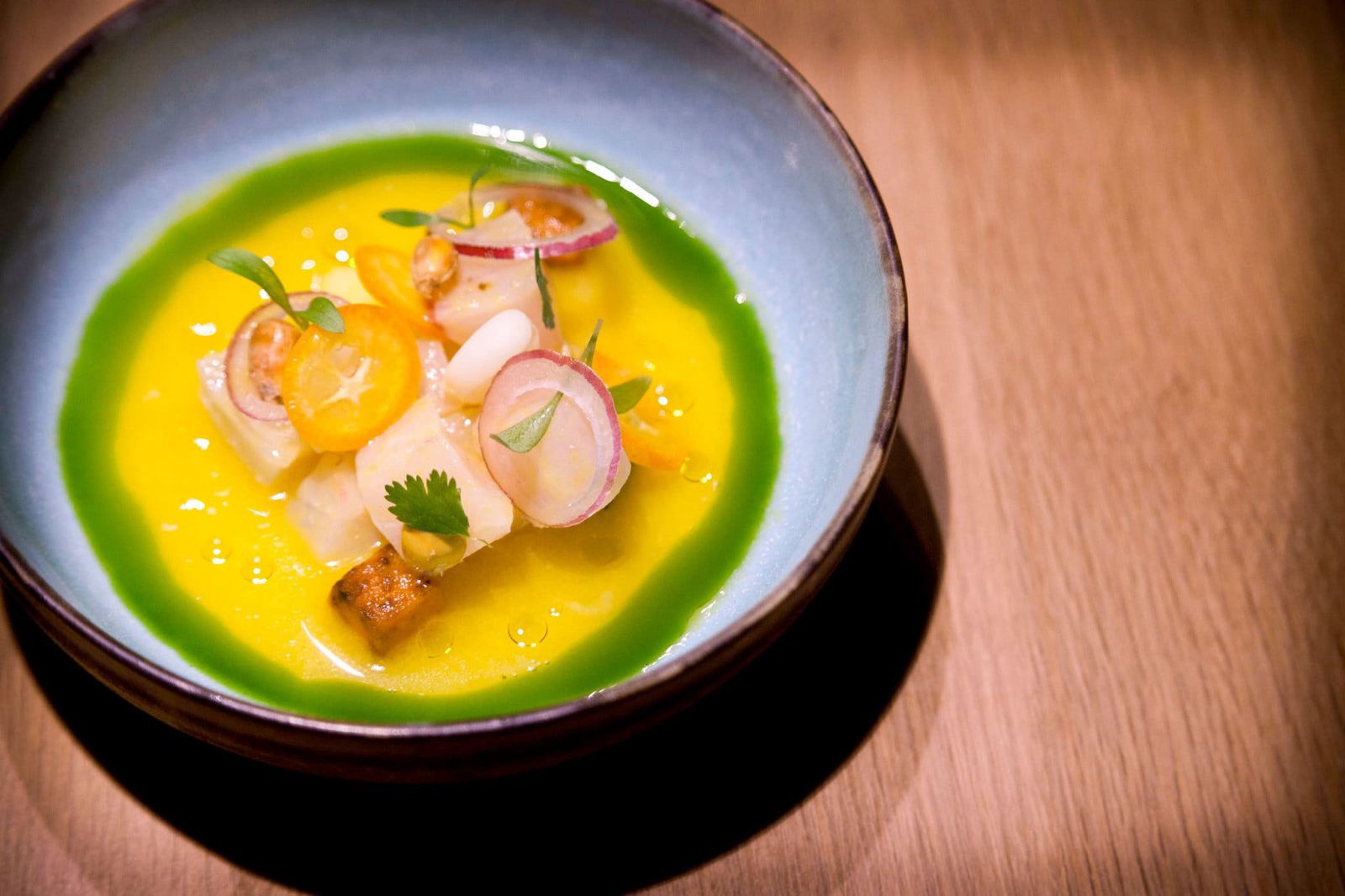
What stories can food recipes and cookbooks tell us about racial hierarchies and nation-building? In the last few decades, historians, anthropologists, and cultural theorists started using cookbooks to reconstruct the histories of beliefs and debates about gender roles, class divisions, and technological advancement, among many other topics. I build on this line of scholarship to propose an approach to cookbooks that centers not only on the recipes as texts and primary sources but also as elements of social practices that configure fields of cultural creation, production, and reception, where concerns about ethnic and racial stigmas circulate and are reproduced or challenged. To exemplify this approach I present my work on the racial politics of Peruvian-style ceviche. I argue that since the late 1990s, Peruvian chefs sought to turn ceviche—which until then had a relatively marginal status in Peru’s culinary repertoire—into the national gastronomy’s flagship dish because it afforded them the ability to simultaneously make valid authenticity claims while foregrounding Japan’s influence in Peruvian cuisine. Ceviche’s material affordance to index Japanese culinary features (linked to technique and modernity) became a way to reduce the salience of qualities related to other heritages—particularly those associated with indigenous and urban poor populations.
Nino Bariola Gonzales is a Postdoctoral Fellow at the Culinaria Research Centre and the Department of Physical and Environmental Sciences at the University of Toronto Scarborough. He is a cultural sociologist interested in food politics, environmental justice, and gender and racial inequalities. His book manuscript, ‘Ceviche Capitalism: Authenticity, Legitimacy, and the Globalization of an “Ethnic Cuisine,”’ examines how Peruvian cuisine became a consecrated global gastronomy after being scorned by international celebrity chefs and national elites. He has two other ongoing research projects about the political ecology of Latin American cacao and climate change and how urban food supply chains are changing and adapting in light of climate change. His research appears in American Behavioral Scientist, Conservation Biology, Regional Studies, and other academic journals and books. Nino Bariola Gonzales received a PhD in Sociology from the University of Texas at Austin and an MA in Latin American Studies from the same university. He also has a BA in Linguistics from the Pontificia Universidad Católica del Perú (PUCP).
 Ethnography Lab